
Blog
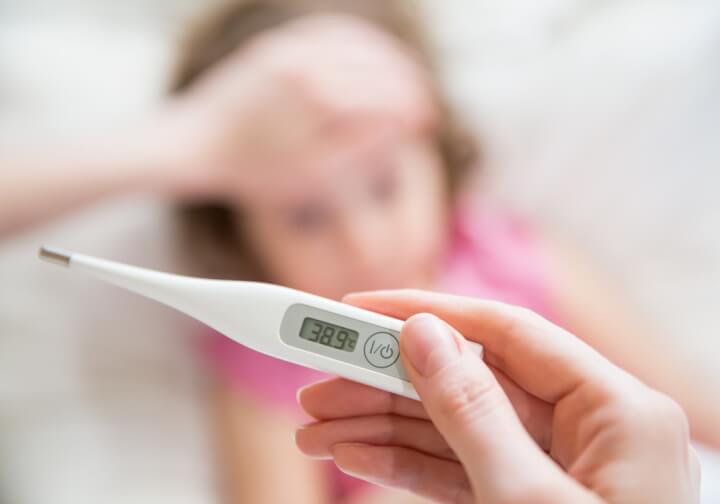
How to reduce fever in children and when to see a doctor
Fever in children is one of the most common reasons why parents call their pediatrician or even rush to the hospital emergency room. Although fever is a natural response of the body to infection, it can still be frightening, especially when the child is breathing rapidly, crying, or is unusually tired. We have prepared an overview of the symptoms that are common in children with fever and when professional help is needed.
We will advise you on how to proceed correctly, what really helps, and when it is necessary to see a pediatrician.
What is fever and why does it occur?
Fever means an increase in body temperature above 38°C measured in the rectum or above 37.5°C measured in the armpit. It is a defense mechanism of the body. Higher temperatures inhibit the growth of viruses and bacteria and activate the immune system.
Fever itself is therefore not the enemy. The problem is rather what caused it or how a sensitive child's body reacts to it.
How to safely reduce fever in children
Not every fever needs to be brought down immediately. If the child is relatively alert, responsive, drinking, and the temperature is not too high, we can initially just monitor their condition. However, if the child is noticeably tired, their whole body hurts, or their temperature is rising rapidly, it is advisable to reduce it.
Proven actions to reduce fever in children
Administer fever-reducing medication:
-
Paracetamol (can be given to children from birth)
-
Ibuprofen (for children from 3 months of age or weighing over 5 kg)
The dosage of medication is always based on the child's weight, not age. Before giving your child any medication, read the package insert and follow the instructions contained therein.
Make sure your child stays hydrated:
-
When your child has a fever, it is important to drink, ideally frequent small sips of unsweetened beverages. Continue breastfeeding infants.
Lighten their clothing:
-
When your child has a fever, their body needs to dissipate heat. Therefore, do not wrap them up or cover them with several blankets.
Ventilate the room or maintain a comfortable room temperature, ideally around 68 to 72 °F.
There are also external physical cooling methods that are only used for high fevers (around 102 to 104 °F) or if the child does not respond to medication. Specifically, you can use:
-
lukewarm wraps (never ice cold),
-
a lukewarm shower at body temperature (quick, short),
-
washing with a sponge dipped in lukewarm water,
-
after cooling, check the temperature after 30 minutes and repeat the procedure several times if necessary.
The above methods should not cause shock or discomfort to the child. If the child is clearly cold, their skin is pale, they are shivering, or they are resisting excessively, stop the method immediately.
What not to do if your child has a fever, or the most common mistakes parents make
In good faith and in an effort to help their child, parents unfortunately make several mistakes. Below is a list of things you should avoid doing:
-
Do not cover a sweating child with several layers of blankets.
-
Do not give them ibuprofen and paracetamol at the same time.
-
Do not give them aspirin or acetylsalicylic acid (risk of Reye's syndrome from the combination of these drugs and a possible viral illness).
-
Do not ignore changes in behavior (they are more important than the number on the thermometer).
Treating fever according to the child's age
The response to fever and its risks naturally varies according to the child's age. We will advise you on how to proceed at each stage of your child's development.
Infants up to 3 months old
- Fever is always a reason to see a doctor.
- A temperature above 38 °C may indicate a more serious infection, as the immune system is not yet mature.
Children from 3 months to about 1 year
During this period, the child is at risk of a number of viral infections, and an elevated temperature may also be related to teething or common respiratory infections.
At this age, it is important to monitor:
-
whether the child is drinking enough,
-
how many wet diapers they have,
-
whether there is any unusual behavior (lethargy, inconsolable crying).
Older children
-
Fever itself is usually less risky.
-
It is crucial to monitor a combination of symptoms such as sore throat, earache, rash, and breathing difficulties. If other symptoms occur, it is definitely advisable to consult a doctor.
When to take a child with a fever to the doctor?
Seek medical attention immediately if:
-
a child under 3 months of age has a temperature above 38 °C,
-
the fever in older children exceeds 40 °C,
-
the child is sleepy, unresponsive, or confused,
-
has a stiff neck or is sensitive to light,
-
is breathing rapidly and noisily or has shortness of breath,
-
has a rash that does not fade when pressed,
-
is not drinking or urinating,
-
is vomiting repeatedly or has severe diarrhea,
-
you suspect dehydration.
Consult a doctor within 24 to 48 hours for fever if:
-
the fever lasts longer than 3 days,
-
the child has a suspected bacterial infection (earache, tonsillitis),
-
the child's condition worsens even though the temperature has dropped,
-
the child has a chronic illness or weakened immunity.
A practical step-by-step guide on what to do when your child has a fever
-
Take their temperature, ideally rectally, especially in young children.
-
Assess the child's overall condition, whether they are drinking, how they are responding, and whether there are any changes in behavior.
-
If the situation requires it, give them medication according to their weight (paracetamol/ibuprofen).
-
Lighten their clothing and give them drinks regularly.
-
Reassess their condition in 30 to 60 minutes.
-
If anything seems wrong, always call your pediatrician or go straight to the emergency room.
At Unicare, we will take care of you and your children with professional care and friendly service. We understand that you are worried about your child, so we will be happy to explain everything to you and guide you through this difficult time.
Sources:
Horečka. Published on: https://www.panadol.com/cs-cz/symptoms/children/fever/fever-in-children-when-to-see-a-doctor.html
5 věcí, které byste měli vědět, když má Vaše dítě horečku (2021). Published on: https://www.lekarnalemon.cz/5-veci-ktere-byste-meli-vedet-kdyz-ma-vase-dite-horecku
MUDr. Petra Brachtlová. Kdy volat, kdy jet, kdy počkat. Published on: https://www.mudrbrachtlova.cz/kdy-volat-kdy-jet-kdy-pockat/
Horečka- kdy jít k lékaři (2020). Published on: https://www.pediatrieslaskou.cz/horecka-kdy-jit-k-lekari/