
Blog
Summer Injuries That Kids Get: When Home Treatment Is Enough and When to See a Doctor
Summer is a time for adventure, outdoor play, and exploring. Children spend more time riding their bikes or scooters, climbing playground equipment, running barefoot in the garden, and going on family trips. With all these activities comes a greater chance of minor injuries. Fortunately, most of them are not serious and can be treated at home. However, it is important for parents to know when basic first aid is enough and when it is time to seek medical attention.
What are the most common summer injuries in children?
The most common summer injuries include:
- scrapes and minor cuts,
- sprains and bruises caused by falls,
- bee, wasp, or other insect stings,
- sunburn,
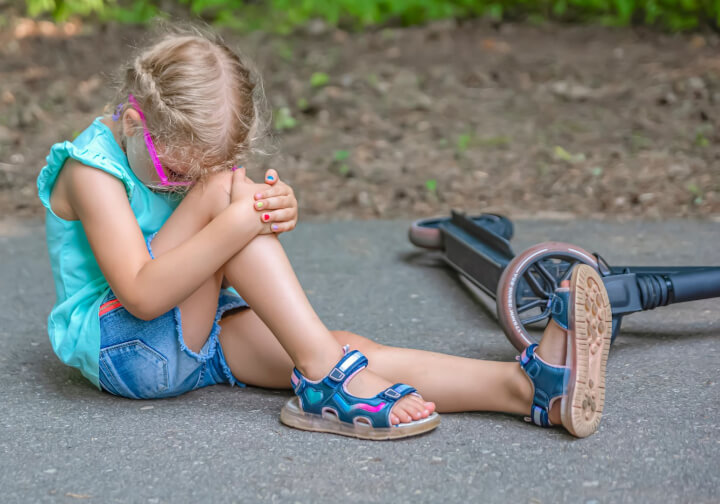
- head injuries after falling from a bicycle or scooter.
In most cases, it is enough to rinse the wound with clean running water, remove any dirt, disinfect the area, and cover it with a sterile dressing. If your child is stung by an insect, cool the affected area and watch for signs of an allergic reaction. In the case of sunburn, cool the skin, encourage your child to drink plenty of fluids, and protect the affected skin from further sun exposure for the next few days.
When should you seek medical attention?
Seek medical care if your child:
- has severe bleeding that does not stop,
- cannot use a limb after a fall or complains of severe pain,
- has suffered a head injury followed by vomiting, confusion, or unusual drowsiness,
- develops swelling of the face or tongue or has difficulty breathing after an insect sting,
- has extensive sunburn or large blisters.
In these situations, home treatment alone may not be sufficient. Prompt medical evaluation can help rule out more serious injuries and ensure your child receives the appropriate care.
Although it is impossible to prevent every accident, many summer injuries can be avoided with simple precautions. Wearing a helmet while cycling or riding a scooter, choosing appropriate footwear, applying sunscreen with a high SPF, and supervising children during outdoor activities are among the most effective ways to keep them safe. If you are ever unsure whether home treatment is enough, do not hesitate to contact your pediatrician.
Sources:
NATIONAL HEALTH SERVICE. Cuts and grazes [online]. London: NHS [cit. 2026-08-05]. Available at: https://www.nhs.uk/conditions/cuts-and-grazes/
NATIONAL HEALTH SERVICE. Insect bites and stings [online]. London: NHS [cit. 2026-08-05]. Available at: https://www.nhs.uk/conditions/insect-bites-and-stings/
NATIONAL HEALTH SERVICE. Sunburn [online]. London: NHS [cit. 2026-08-05]. Available at: https://www.nhs.uk/conditions/sunburn/
CENTERS FOR DISEASE CONTROL AND PREVENTION. HEADS UP to Healthcare Providers [online]. Atlanta: CDC [cit. 2026-08-05]. Available at: https://www.cdc.gov/heads-up/