
Blog
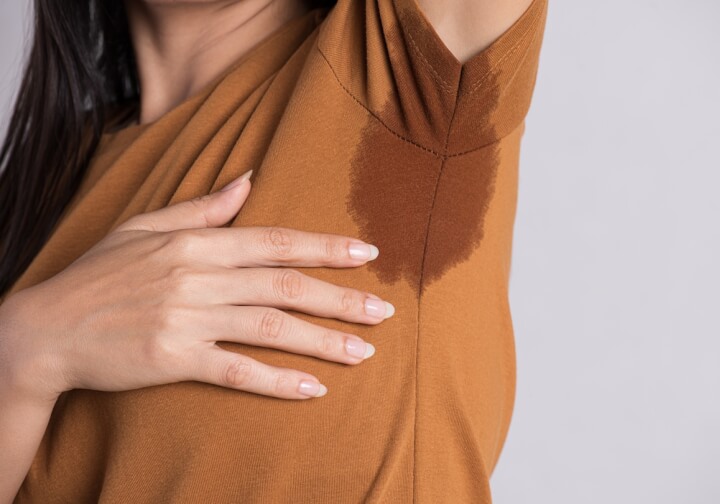
How to get rid of excessive sweating
Sweating is a natural physiological process that helps regulate body temperature. It is essential for our survival and is controlled by the endocrine and nervous systems. However, some people sweat significantly more than usual, which can negatively impact their daily lives, self-confidence, and social functioning.
It can also happen that a person who does not normally sweat much begins to sweat much more, and in such cases, this may be a symptom of an underlying medical condition. Excessive sweating (known as hyperhidrosis) can occur in specific areas, such as the underarms, palms, soles of the feet, or face, or it can affect the entire body. It is therefore important to distinguish between a normal bodily reaction and a condition that warrants treatment and a visit to a skin specialist (dermatologist).
What is excessive sweating (hyperhidrosis)
Hyperhidrosis refers to sweat production beyond what is necessary to cool the body. We distinguish between:
-
Primary hyperhidrosis: usually begins in childhood or adolescence, is typically localised, and is not associated with another medical condition. This disorder is currently treated only by suppressing sweating.
-
Secondary hyperhidrosis: arises from another health problem or medication use, often manifesting as generalised sweating. It usually resolves once the underlying trigger is addressed.
The most common causes of excessive sweating
Excessive sweating can have many causes, often involving a combination of factors.
Physiological and lifestyle factors
-
stress and anxiety,
-
physical exertion,
-
hot environments,
-
hormonal changes (puberty, menopause),
-
consumption of alcohol, caffeine, and spicy foods.
Medical causes
-
thyroid disorders,
-
infections and fever,
-
diabetes (including hypoglycemia),
-
obesity,
-
neurological disorders,
-
certain medications (antidepressants, hormone therapy).
How to manage excessive sweating at home
For milder forms of sweating caused by external factors or, for example, medications, lifestyle changes and proper skin care often help. If sweating occurs while taking medications, do not stop taking them without consulting your general practitioner or prescribing doctor.
Basic recommendations
-
use stronger antiperspirants (preferably in the evening on dry skin),
-
wear breathable clothing made from natural materials,
-
limit triggers (caffeine, alcohol, very spicy foods),
-
maintain regular hygiene and gentle skin care,
-
reduce stress (relaxation techniques, psychotherapy).
Practical tips
-
rotate shoes and socks if you have sweaty feet,
-
use absorbent liners in clothing,
-
take short showers with lukewarm water,
-
use antibacterial products if your sweat has an unpleasant odour.
Medical treatment for excessive sweating
If home remedies aren’t enough, effective medical treatments are available. Our dermatologists at Unicare will be happy to discuss the available options with you in detail and recommend a treatment plan tailored specifically to your needs.
Topical treatments
-
strong antiperspirants with a higher concentration of aluminium salts,
-
special prescription solutions.
Dermatological and specialised methods
-
iontophoresis (often applied to the palms and soles),
-
botulinum toxin injections, which temporarily block sweat glands,
-
systemic treatment (medications affecting the nervous system),
-
modern instrumental methods (laser, microwave therapy),
-
surgical solutions for severe cases (this is rather rare).
When to see a doctor for excessive sweating
You should consider seeing a doctor, especially in the following cases:
-
sweating appeared suddenly,
-
it is generalised sweating (especially at night),
-
it is accompanied by weight loss, heart palpitations, or fatigue,
-
it significantly limits daily functioning,
-
it does not respond to standard measures.
A doctor can rule out secondary causes and recommend targeted treatment.
The psychological impact of excessive sweating
Hyperhidrosis is not just a physical problem. Excess sweat creates an environment for rapid bacterial growth and the development of unpleasant odours, not to mention the visible signs of sweating. This often leads to:
-
shyness and avoidance,
-
social anxiety,
-
lowered self-esteem,
-
stress, which further exacerbates and deepens the problem.
In some cases, a combination of dermatological treatment and psychological support helps.
Sweat is a natural part of our lives, but if its amount and associated symptoms begin to bother you, it becomes a problem that, in most cases, has a solution. For milder forms, lifestyle adjustments and proper skin care can help; for more severe cases, effective dermatological and medical treatments are available.
On the other hand, it is important not to underestimate sudden or severe generalised sweating, as it may signal another medical condition (unless the sweating is related to strenuous activity or immediate stress). If sweating is affecting your quality of life, it is advisable to consult a specialist, as treatment options are more extensive today than in the past and this unpleasant condition can be addressed.
Sources:
Nadměrné pocení může být příznakem nemoci. (Cit. 26.2.2026.) Published on: https://www.cpzp.cz/clanek/4311-0-Nadmerne-poceni-muze-byt-priznakem-nemoci.html
Matyáš Palan (2024). Co použít na nadměrné pocení? (Cit. 26.2.2026.) Published on: https://www.benu.cz/co-pouzit-na-nadmerne-poceni
Nadměrné pocení – příčiny a léčba (2024). (Cit. 26.2.2026.) Published on: https://www.drmax.cz/clanky/nadmerne-poceni-priciny-a-lecba
Hana Škopková. Nadměrné pocení – kdy je pot na obtíž a jak pocení zastavit? (Cit. 26.2.2026.) Published on: https://www.magistra.cz/cs/novinky/2025-06-nadmerne-poceni-kdy-je-pot-na-obtiz-a-jak-poceni-zastavit
Opening hours
Dear clients,
we would like to announce a that Unicare clinic is closed during national holidays, such as 28th of September 2026.
Thank you for understanding!
Unicare Medical Team