
Blog
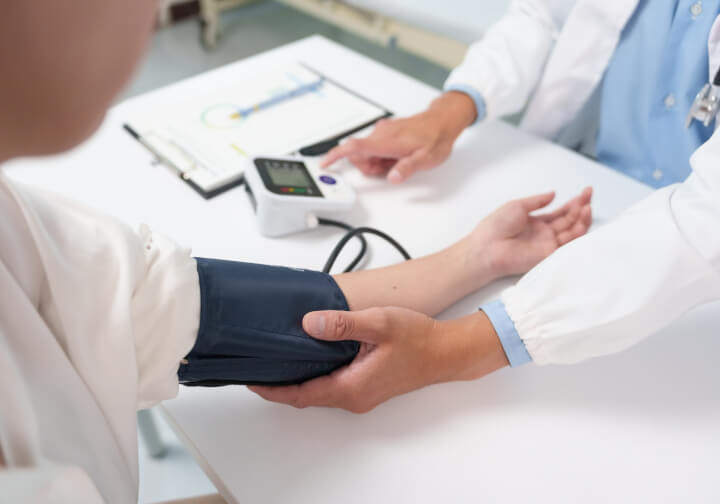
Do you have high blood pressure? We will advise you on how to lower it and when to see a doctor
High blood pressure (known as arterial hypertension) is one of the most common lifestyle diseases today and one of the main risk factors for heart attack, stroke, kidney failure, and vision impairment. The insidious nature of hypertension lies in the fact that it often does not cause pain for a long time and may not manifest itself in any significant way. Nevertheless, it can cause serious changes in the body without being noticed.
That is why it is important to know how to recognize high blood pressure, what affects it, how it can be lowered, and when professional medical care is needed.
What is high blood pressure, and what are normal values?
Blood pressure is measured using a special device called a tonometer and is expressed as two values:
-
systolic pressure (upper) – pressure when the heart contracts
-
diastolic pressure (lower) – pressure when the heart muscle relaxes
Values up to approximately 120/80 mmHg are considered normal for an adult. We speak of high blood pressure (hypertension) when values of 140/90 mmHg and higher are repeatedly measured. It is reported that the normal value for home measurement can be below 135/85 mmHg and below 140/90 mmHg during a preventive examination by a doctor (the limit is increased due to the stress of measurement). The start of treatment for high blood pressure is always determined by your general practitioner.
However, it is necessary to distinguish between:
-
primary (essential) hypertension – accounts for the majority of cases, has no single clear cause
-
secondary hypertension – occurs as a result of another disease (e.g., kidney disease, hormonal disorders)
How does high blood pressure manifest itself
Many people have no symptoms and high blood pressure is discovered by chance during a preventive check-up. However, symptoms may occur, especially in cases of long-term untreated hypertension or a sudden rise in blood pressure.
Possible symptoms include:
-
headaches, especially in the occipital region,
-
dizziness, ringing in the ears,
-
heart palpitations,
-
shortness of breath during exertion,
-
fatigue, concentration disorders,
-
nosebleeds (less common, but typical).
It is important to emphasize that the absence of symptoms does not mean the absence of risk.
What causes high blood pressure
The development of hypertension is usually a combination of several factors. The most significant include:
-
genetic predisposition,
-
long-term stress and psychological strain,
-
overweight and obesity,
-
lack of exercise,
-
excessive salt intake,
-
smoking and excessive alcohol consumption,
-
sleep disorders (including sleep apnea).
The risk of developing hypertension naturally increases with age, but it is also becoming more common in younger adults.
How to lower blood pressure without medication
Lifestyle changes play a key role in cases of mildly elevated blood pressure or as a supplement to pharmacological treatment. Their effect is often underestimated, yet they can lead to significant improvement.
Lifestyle changes
-
Salt restriction – ideally less than 5 g per day
-
Weight reduction – even a 5 to 10% weight loss has a measurable effect
-
Regular exercise – walking, swimming, cycling for at least 150 minutes per week
-
Healthy diet – plenty of vegetables, fruit, whole grains, fish
-
Limit alcohol and quit smoking completely
Mental balance
-
stress management, learning relaxation techniques,
-
getting enough sleep,
-
psychotherapy for long-term mental stress.
In some patients, these steps can lower blood pressure enough that medication is not immediately necessary.
When medication is necessary
Medication for high blood pressure is necessary if your blood pressure:
-
exceeds 140/90 mmHg over a long period of time,
-
is associated with other risk factors (diabetes, high cholesterol),
-
or you have already some organ damaged (heart, kidneys, brain).
In these cases, antihypertensive treatment is usually necessary. You will most likely discuss the specifics with your cardiologist. Modern medications are well tolerated and are intended not only to lower blood pressure, but above all to prevent serious complications.
When to see a doctor for high blood pressure
You should contact your doctor if any of the following occur:
-
you repeatedly measure high blood pressure at home,
-
you experience new symptoms (headache, shortness of breath, chest pressure),
-
you experience a sudden significant increase in blood pressure (e.g., above 180/110 mmHg).
Emergency care is necessary if high blood pressure is accompanied by chest pain, speech impairment, paralysis, or severe headache. In such cases, call 112 immediately.
High blood pressure is a common but easily manageable condition. The key to controlling it, however, is early detection, regular monitoring, and long-term cooperation with your doctor. Lifestyle changes are also crucial and, in combination with modern treatment, significantly reduce the risk of heart attack, stroke, and other complications. Although hypertension often does not cause pain, its consequences can be very serious. That is why it should not be underestimated.
Sources:
Vysoký krevní tlak (2021). (Citováno 14. 1. 2026.) Published on: https://www.vzp.cz/o-nas/tiskove-centrum/otazky-tydne/vysoky-krevni-tlak
Vysoký krevní tlak (hypertenze): formy a příznaky (2020). (Citováno 14. 1. 2026.) Published on: https://www.nzip.cz/clanek/923-vysoky-krevni-tlak-hypertenze-formy-a-priznaky
Vysoký krevní tlak (hypertenze) - příznaky a léčba (2023). (Citováno 14. 1. 2026.) Published on: https://www.drmax.cz/clanky/odhalte-vysoky-krevni-tlak-vcas
Ing. Jan Klusák, Ph.D. (2022). Zaručené tipy, jak snížit krevní tlak a špatný cholesterol. (Citováno 14. 1. 2026.) Published on: https://www.kardilus.cz/blog/cholesterol/jak-snizit-krevni-tlak-a-cholesterol/
Mgr. Ľubica Sobčáková (2020). Jak snížit krevní tlak neboli hypertenzi - 1. díl. (Citováno 14. 1. 2026.) Published on: https://www.benu.cz/jak-snizit-vysoky-krevni-tlak-1-dil
Mgr. Ľubica Sobčáková (2020). Jak snížit krevní tlak? Konkrétní tipy - 2. díl. (Cit. 14. 1. 2026.) Published on: https://www.benu.cz/jak-snizit-krevni-tlak-konkretni-tipy-2-dil