
Blog
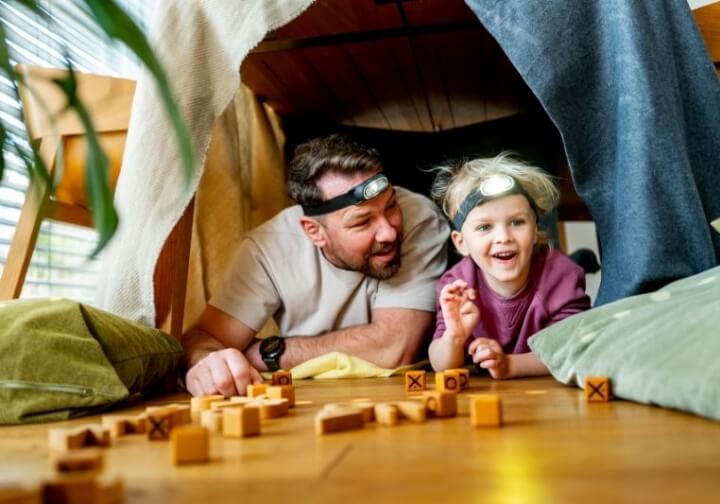
Dad doesn't have to be a superhero. It's enough for him to be there for his kids
Father’s Day is an opportunity to reflect on the fact that fathers play a much more important role in a child’s life than was assumed just a few decades ago.
Today we know that fathers are not merely a source of support for the family or guides through major life decisions. Research shows that their daily presence and active involvement have a significant impact on a child’s emotional, social, and cognitive development. It is not about perfection or the amount of time spent together, but rather the quality of the relationship and an interest in the child’s world.
According to scientific studies, children who experience a supportive and close relationship with their father often have higher self-esteem, better relationship-building skills, and greater psychological resilience. Actively involved fathers can also positively influence academic performance, conflict resolution skills, and the ability to cope with stressful situations. Moreover, the benefits are not limited to early childhood; the importance of a father’s support is also evident during adolescence and young adulthood.
It’s not about grand gestures, though. Research suggests that it’s the ordinary, everyday moments that play a key role: walking to school together, reading before bed, building with Legos, or having a conversation over dinner. Experts point out that play between a father and child, in particular, can support the development of social skills, self-control, and the ability to respond appropriately to new situations. Through play, children learn to cooperate, solve problems, and gain a sense of security from which they can explore the world around them.
Father’s Day, then, doesn’t have to be a celebration of achievement or perfect parenting. It’s enough to remember that what matters most to a child is the knowledge that there is someone by their side who takes the time to listen, offer encouragement, and be there for them. It is precisely these kinds of relationships that lay a solid foundation for healthy development and often represent one of the most valuable investments in a child’s future.
How Can Dads Strengthen Their Bond with Their Children?
Building a close relationship doesn’t have to mean making big changes to your daily routine. Consistency and genuine interest are often more important than the amount of time you spend together.
- Set aside regular time just for your child. It doesn’t have to be hours. What’s more important is that your child knows this time belongs only to the two of you.
- Get involved in daily routines. Bedtime reading, the walk to school, or preparing dinner together can all be opportunities for conversation.
- Play together. Play isn’t just fun—it helps children develop creativity, social skills, and the ability to manage their emotions.
- Listen without judging. When your child shares their worries or setbacks, try to understand their perspective first before offering a solution.
- Don’t be afraid to talk about emotions. Children learn to manage their own feelings, in part, by seeing how adults deal with theirs.
- Set an example when it comes to health. Regular exercise, rest, and preventive checkups show children that health is an important part of life.
Sources:
Sarkadi, A., Kristiansson, R., Oberklaid, F., & Bremberg, S. (2008). Fathers' Involvement and Children's Developmental Outcomes: A Systematic Review of Longitudinal Studies. Acta Paediatrica, 97(2), 153–158.
Puglisi, N., Hulbert, C., Tomlinson, M., & Milgrom, J. (2024). Father Involvement and Emotion Regulation During Early Childhood: A Systematic Review. BMC Psychology, 12, 165.
Yogman, M., Garner, A., Hutchinson, J., Hirsh-Pasek, K., & Golinkoff, R. (2018). The Power of Play: A Pediatric Role in Enhancing Development in Young Children. Pediatrics, 142(3), e20182058.